

 Vet Recommended
 Voted #1 by Top Trainers & K9 Units
 Made in USA
 Third-Party Tested
Can Stress Change How Your Dog Digests?

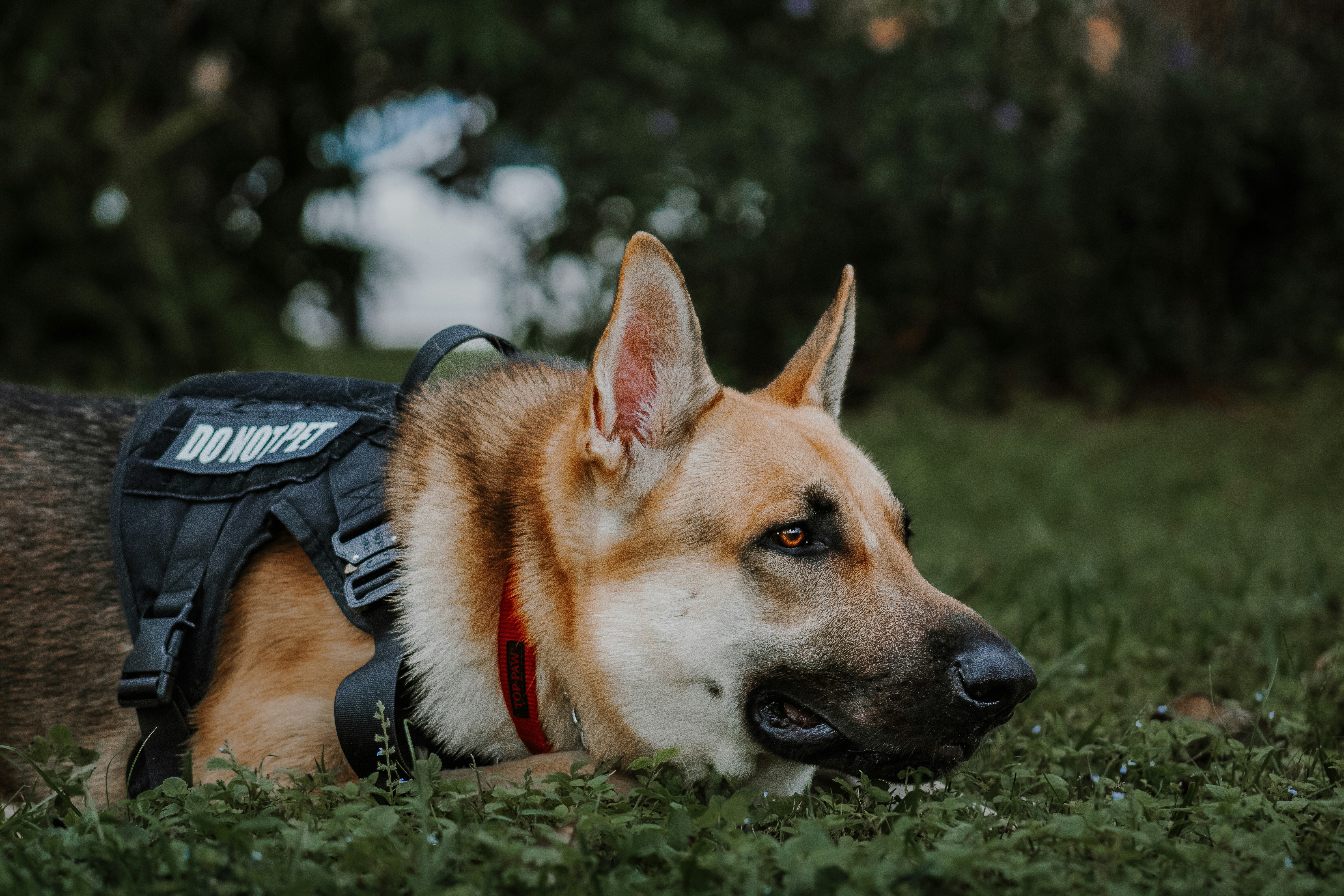
Stress doesn't stay in the head.
Ask any handler who has driven through the night to a trial or a deployment.
The dog is ready.
But the gut may not be.
Loose stool is very common on travel days.
A dog who skips breakfast in a new kennel, that's extremely common.
A body that drops weight during a hard training block, it's seen all the time, and it's often an area people struggle in. Most often, this is where people will go searching for bulking products for their dogs.
So here's the question: can stress really change how a dog digests, and does that reach all the way to healthy weight?
These were questions recently discussed with handlers & their employed K9, all around areas that have been studied in various areas.
How & Why are stress and digestion in dogs are linked?
The idea of it all starts in the brain.
The stress signal. Under stress, the brain releases CRF (corticotropin-releasing factor), the signal that starts the stress response.
The nerve switch. CRF works through the autonomic nervous system, the part that runs the body on autopilot. Researchers describe less "rest and digest" vagal activity to the stomach and more "fight or flight" sympathetic activity.¹
Meaning: when your dog is stressed, the nerves that tell the gut to digest get "quieter."
What was actually tested?
Stress and digestion: shown in dogs, in an older lab study. When dogs were exposed to loud noise, the gallbladder stopped its normal squeeze after a meal. Giving CRF to the brain copied the effect, and blocking CRF stopped it.²
Meaning: noise stress interrupted the step that sends bile into the gut to help digest fat.
Gut trouble on the job: common in working dogs, but stress wasn't measured. In a survey of 188 police working dogs, 10.6% had diarrhea-grade stool on the day they were checked. Handler-rated activity level predicted both diarrhea and a lower body condition score.³
Meaning: about 1 in 10 working dogs had loose stool that day, and the most active dogs tended to be thinner.
Stress and weight: seen in shelter dogs, with many factors at play. In 29 dogs entering a shelter, stress hormone levels were highest in the first days, and the dogs lost about 5% of their body weight over two weeks.⁴
Meaning: for a 50-lb dog, that is about 2.5 lb in two weeks.
What the hype misses
Stress is one thread, but it's not the entire story.
The shelter dogs also changed food, routine, and space. The police dogs worked hard and ate on a training schedule.
And the clearest evidence that blocking the stress signal protects the gut comes from lab rodents given drugs, not food or supplements.¹
What the evidence supports, and what it doesn't
What holds up: stress signals reach the gut through the nervous system, and in dogs, stress has interrupted normal digestion.
What doesn't: proof that stress alone causes weight loss, or that any one product blocks the stress signal.
What you can do:
Protect rest.
Keep routines steady on travel and trial days.
Watch stool and body condition, and talk with your veterinarian if gut upset or weight changes keep showing up.
At Pet MatRx®, this very subject is why we pair THINK, our nutritional support for nervous system + cognitive balance, with PROTECT, for greater nutritional support for normal gut function.
If we can help calm nerves, we can help support a calmer gut.
References
- Taché Y, Larauche M, Yuan PQ, Million M. Brain and gut CRF signaling: biological actions and role in the gastrointestinal tract. Curr Mol Pharmacol. 2018;11. doi:10.2174/1874467210666170224095741
eScholarship record - Lenz HJ, Messmer B, Zimmerman FG. Noradrenergic inhibition of canine gallbladder contraction and murine pancreatic secretion during stress by corticotropin-releasing factor. J Clin Invest. 1992;89(2):437-443. doi:10.1172/JCI115603
Journal article - Alves JC, Jorge P, Santos A. A survey on the prevalence of diarrhea in a Portuguese population of police working dogs. BMC Vet Res. 2021;17:211. doi:10.1186/s12917-021-02920-y
PubMed Central record - van der Laan JE, Vinke CM, van der Borg JAM, Arndt SS. Restless nights? Nocturnal activity as a useful indicator of adaptability of shelter housed dogs. Appl Anim Behav Sci. 2021;241:105377. doi:10.1016/j.applanim.2021.105377
Full text (Utrecht University repository)