

 Vet Recommended
 Voted #1 by Top Trainers & K9 Units
 Made in USA
 Third-Party Tested
Pet Health Clickbait: How a Real Study Became a Misleading Headline
You've seen the format.
A cute dog.
A big number.
A university name in small print, and a TON of likes and reshares.
"Green tea cuts growth of dog cancer cells by 50% in lab tests."
It links to a real, peer-reviewed study.
So it must be true. Right?
At Pet MatRx®, we opened that study and read it start to finish. It turned out to be a perfect lesson in how a real study becomes clickbait, and how you can spot the next one.
What did the study actually do?
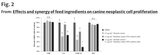
The 2016 study grew three lines of dog cancer cells in a lab: a mast cell tumor line, a mammary cancer line and a bone cancer (osteosarcoma) line.¹ Researchers added five plant extracts, dissolved in a lab solvent, and measured growth after 48 hours.¹
Meaning: no dog ate or drank anything. These were cells in a dish.
Turmeric extract slowed growth at lower concentrations than green tea on all three cell lines.¹ The authors dropped green tea from further testing, and it isn't mentioned in the study's abstract.¹
Meaning: the study's spotlight was on turmeric and rosemary. Green tea was a side result.
Even for turmeric, the authors note that less than 10% of curcumin is typically absorbed, and they call for studies in living animals.¹
How does a real study turn into pet health clickbait?
Four moves. The green tea graphic makes every one.
1. Pick the ingredient people already love.
Green tea already sounds healthy. The study's own conclusion was about turmeric and rosemary.¹
2. Turn a yardstick into a promise.
The "50%" is the study's IC50, the concentration that cuts cell growth in half.¹ Every extract was measured against that line. Green tea needed about 11 to 48 micrograms per milliliter to reach it, depending on the cell line.¹
Meaning: 50% is a measuring line, not a special result for green tea.
3. Swap the subject.
Cells in a dish became a fluffy dog sipping from a teacup.
4. Drop the context.
The graphic leaves out who paid: Royal Canin funded the study, and two of its four authors worked there.¹ It leaves out the year, too.
None of these moves needs an outright lie.
That's what makes clickbait hard to catch. It keeps the slice of a study its audience most wants to hear.
How do you read the next one?
Before you share, open the study and ask four questions.
Cells, mice or dogs? Here: cells.
What did the abstract highlight? Here: turmeric and rosemary, not green tea.
Who paid? Here: Royal Canin.
When? Here: 2016.
If the answers don't match the headline, the headline is doing more than the study did.
That goes for us, too. Hold our posts to the same four questions.
What holds up: in one lab study, green tea extract slowed three canine cancer cell lines at high lab concentrations.
What doesn't: any claim that green tea, in a bowl or a supplement, slows, treats or prevents cancer in dogs. This study never tested that.
If your dog has cancer, talk with your veterinarian before adding any food or supplement.
A real study can still tell a false story.
Read past the headline.
References
- Levine CB, Bayle J, Biourge V, Wakshlag JJ. Effects and synergy of feed ingredients on canine neoplastic cell proliferation. BMC Vet Res. 2016;12:159. doi:10.1186/s12917-016-0774-9 — journal article page